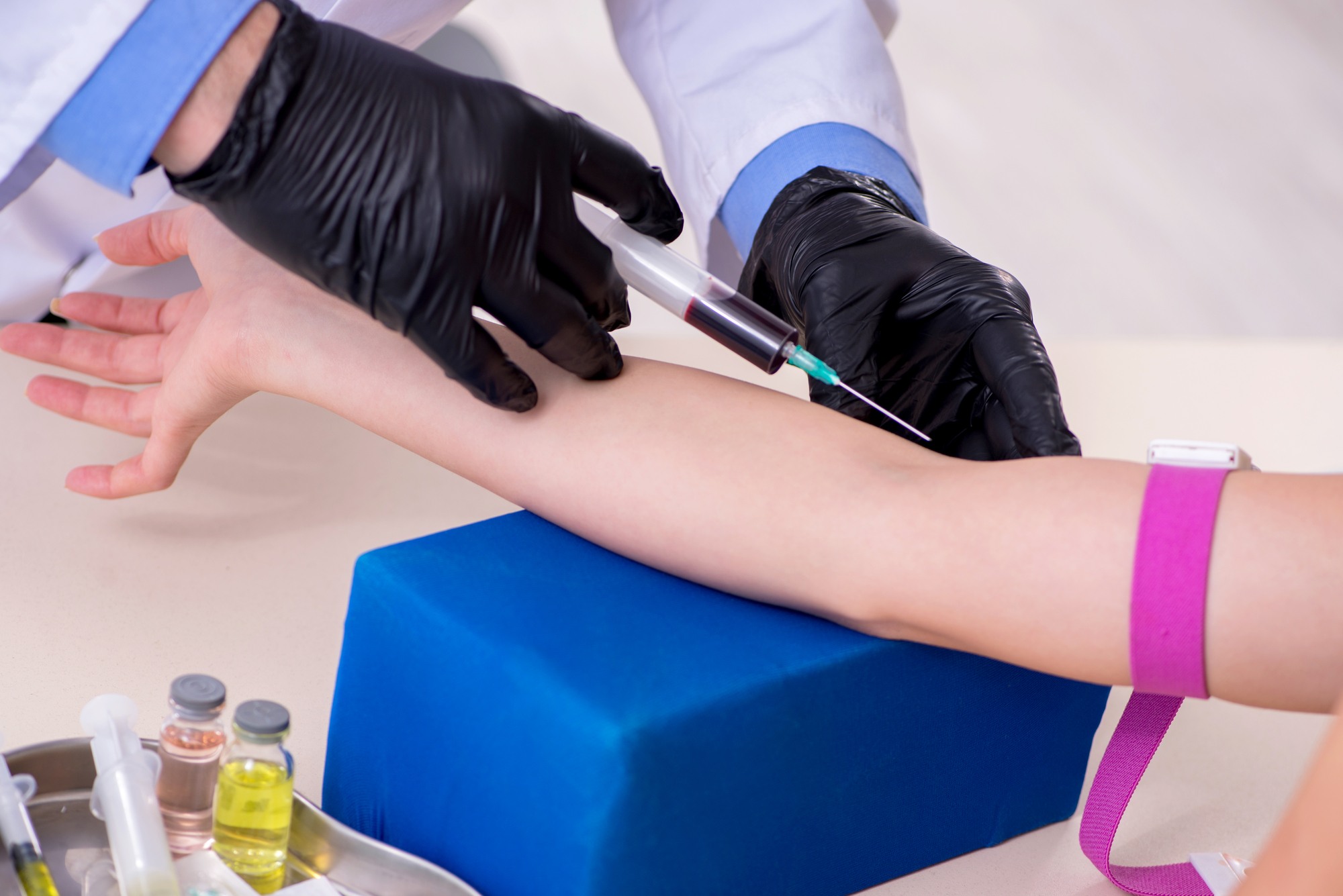
A judge has certified a class action lawsuit that alleges consent DNA profiles for individuals who were excluded as a suspect in a criminal investigation were not destroyed as required by the Criminal Code.
According to the DNA donors class action lawsuit, Ontario has retained the DNA profiles of innocent donors, which is reportedly a violation of section eight of the Canadian Charter of Rights and Freedom, which protects residents from unreasonable search and seizure.
The DNA donors class action lawsuit claims this retention of consent DNA profiles from innocent donors also violates the common law right to privacy.
Ontario disputes the allegations in the DNA donors class action lawsuit in Canada and maintains it does not violate section eight of the Canadian Charter of Rights and Freedom because it retains only anonymized data from the DNA samples.
Class Members of the DNA donor class action lawsuit include: “all persons who voluntarily provided a bodily substance sample, which was subject to forensic DNA analysis by the Ontario Centre of Forensic Sciences and for whom forensic analysis created results which established that the voluntarily given sample that did not match any bodily samples obtained within the meaning of s. 487.05(1)(b) of the Criminal Code” since June 30, 2000.
Plaintiff Micky Granger initially filed the DNA donor class action lawsuit in Canada in 2018, seeking more than $30 million in damages.
According to the DNA donor class action lawsuit, the Ontario Centre of Forensic Sciences (CFS) analyzes hundreds of bodily samples each year. It extracts DNA, creates DNA profiles and conducts comparative DNA analysis.
The bodily samples used to obtain DNA can be taken in several ways, according to the DNA donor class action lawsuit. The samples may be obtained with a warrant directing a sample to be taken from an individual or collected from discarded items containing bodily substances, such as a cigarette butt. Individuals may also consent to provide a voluntary sample.
“The Class Members in this action all voluntarily gave a bodily sample which was ultimately analysed by the CFS,” Micky alleges in the DNA donor class action lawsuit. “Every Class Member was voluntarily assisting law enforcement agencies in the execution of their duties.”
The collection and retention of DNA is protected in the Criminal Code and is supervised by the court, according to the DNA donor class action lawsuit. When a voluntary donor’s DNA profile is not a match in a criminal investigation, the Criminal Code requires the samples and results to be destroyed. If results are in electronic form, the Criminal Code requires access to the results to be permanently and immediately removed once the DNA analysis establishes that the voluntary donor’s DNA profile is not a match in the criminal investigation.
Despite these clear requirements in the Criminal Code, Micky alleges that CFS generally retains voluntary DNA donors’ results as part of their records and does not destroy the DNA results of innocent Class Members.
According to the DNA donor class action lawsuit, CFS created physical and electronic records from the analysis of Class Members’ DNA samples, which reportedly included a unique code traceable to the DNA donor’s name, correspondence with law enforcement agencies, custody documentation for the bodily sample, the donor’s DNA profile, and results from a comparison of the DNA donor’s DNA profile to DNA obtained in a criminal investigation.
The bodily samples the Class Members provided were reportedly destroyed or transferred to a law enforcement agency for destruction. However, the DNA results and records that CFS created were allegedly not destroyed within a reasonable time period even though the voluntary DNA donors were not convicted of a criminal offence.
“The CFS maintains a database and records wherein the DNA Results and records respecting Class Members can be accessed by select individuals,” Micky says in the DNA donors class action lawsuit.
“The retention and access to DNA results and records regarding the Class Members significantly impinges upon the privacy interests of the Class Members.”
The DNA donor class action lawsuit asserts claims for intrusion upon seclusion, breach of section 8 of the Canadian Charter of Rights, breach of Ontario’s privacy statute. Micky is seeking $2 million in punitive damages, arguing that this sum is warranted because the defendant’s conduct was “high-handed, reckless, without care, deliberate, and in disregard of the Class Members’ rights to privacy.”
Have you ever voluntarily given DNA to assist a criminal investigation? What do you think about this DNA donors class action lawsuit. Tell us your thoughts in the comment section below!
Micky is represented by Jody Brown and Geetha Philipupillai of Goldblatt Partners.
The DNA Donors Class Action Lawsuit is Micky Granger v. Her Majesty the Queen in Right of the Province of Ontario, Case No. CV-18-00605134-00CP, in the Ontario Superior Court of Justice, Canada.
Read More Lawsuit & Settlement News:
Tim Hortons Facing Class Action Lawsuit for Tracking Mobile App Users
Central Health Class Action Lawsuit to be Launched After Privacy Breach
Long-Term Disability Lawyer | Insurance Claim Denial Help
Canada Roundup Glyphosate Cancer Class Action Lawsuit Investigation
ATTORNEY ADVERTISING
Top Class Actions is a Proud Member of the American Bar Association
LEGAL INFORMATION IS NOT LEGAL ADVICE
Top Class Actions Legal Statement
©2008 – 2026 Top Class Actions® LLC
Various Trademarks held by their respective owners
This website is not intended for viewing or usage by European Union citizens.
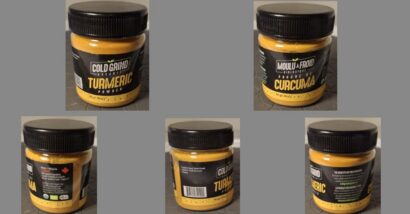
Cold Grind organic turmeric powder flagged over banned Sudan I dye
November 23, 2026 | Product Recalls